When it comes to choosing a sparkling gemstone for an engagement ring, necklace, or any piece of fine jewelry, buyers today are spoilt for choice. Beyond traditional mined diamonds, there are now stunning alternatives like moissanite and lab-grown diamonds that promise beauty, durability, and ethical advantages. Each of these gems has its own unique characteristics, pros, and considerations. Let’s explore the differences in detail so you can make an informed choice.
1. Understanding the Basics
Natural Diamonds
Diamond vs moissanites are formed over billions of years deep within the Earth under extreme heat and pressure. Composed entirely of carbon, they are the hardest natural material on Earth, ranking 10 on the Mohs hardness scale. They have long been prized for their brilliance, durability, and symbolic value.
Moissanite
Moissanite was first discovered in 1893 by scientist Henri Moissan in a meteor crater. The natural form is extremely rare, so virtually all moissanite used in jewelry today is lab-created. Moissanite is made of silicon carbide and is known for its fiery sparkle, often exhibiting more rainbow flashes than diamonds.
Lab-Grown Diamonds
Lab-grown diamonds are chemically, physically, and optically identical to natural diamonds. They are created in controlled environments using either High Pressure High Temperature (HPHT) or Chemical Vapor Deposition (CVD) methods. Unlike diamond simulants, they have the exact same crystal structure as mined diamonds.
2. Appearance & Sparkle
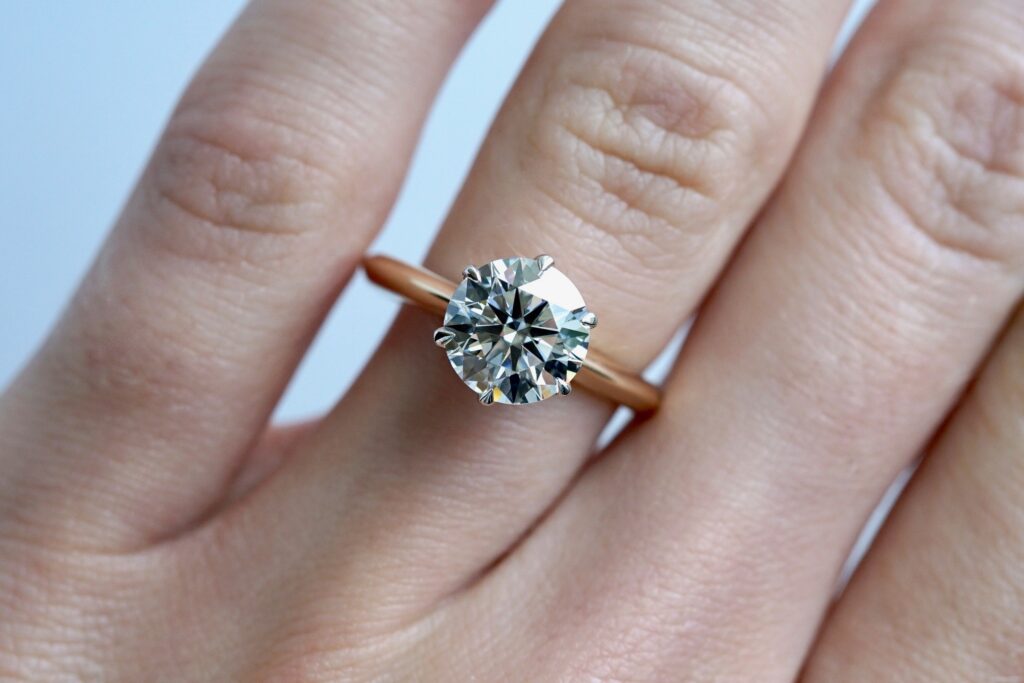
Diamond: Diamonds have a unique sparkle composed of three elements—brilliance (white light reflection), dispersion (rainbow-colored light), and scintillation (sparkle when moving). They have a subtle, classic fire that many find timeless.
Moissanite: Moissanite has higher refractive index (2.65 vs. diamond’s 2.42) and dispersion, which means it often displays more colorful flashes than a diamond. While some love this extra fire, others find it a little too “rainbow-like” for a diamond look.
Lab-Grown Diamond: Since they are real diamonds, their sparkle is identical to natural diamonds. They can be cut and polished to the same standards, offering that same balance of brilliance, fire, and scintillation.
3. Durability
Durability is crucial for everyday jewelry like engagement rings.
-
Diamond (natural or lab-grown): Mohs hardness of 10, unmatched resistance to scratches, and excellent toughness.
-
Moissanite: Mohs hardness of 9.25, which is extremely durable and resistant to scratching—harder than sapphires, rubies, and most gemstones, though slightly softer than diamonds.
For everyday wear, all three options are highly durable, though diamonds have the edge in hardness.
4. Price Comparison
Natural Diamonds: Mined diamonds are the most expensive of the three, primarily due to the mining process, rarity, and traditional market pricing.
Moissanite: Significantly more affordable—often 80–90% cheaper than a mined diamond of the same size. For example, a 1-carat moissanite might cost a few hundred dollars, compared to several thousand for a diamond.
Lab-Grown Diamonds: Typically 40–70% less expensive than mined diamonds of comparable quality. They are more costly than moissanite but offer the same physical properties as natural diamonds.
5. Ethical & Environmental Impact
Natural Diamonds: Mining can have environmental and ethical concerns, though many companies now offer “conflict-free” diamonds certified by the Kimberley Process. Still, the environmental footprint is significant.
Moissanite: Because all commercial moissanite is lab-created, it has a much lower environmental impact compared to mining. It’s also conflict-free by default.
Lab-Grown Diamonds: Produced in a lab, these diamonds avoid the environmental disruption of mining. However, energy consumption during production can be high, depending on the technology and power source.
6. Color and Clarity
Diamond: Available in a range of grades. Higher-quality diamonds are colorless (D-F) and have minimal inclusions. Lower grades may show yellow or brown tints.
Moissanite: Generally near-colorless, though older versions sometimes showed a slight yellow or green tint. Modern high-quality moissanites are very close to colorless and eye-clean.
Lab-Grown Diamond: Like mined diamonds, they are graded on the same GIA or IGI scales for color and clarity. They can be flawless or have inclusions depending on growth conditions.
7. Resale Value
Natural Diamonds: Historically retain more resale value than moissanite or lab-grown diamonds, though retail-to-resale loss is still significant.
Moissanite: Low resale value, as it’s inexpensive to purchase new.
Lab-Grown Diamonds: Currently have lower resale value compared to mined diamonds, as prices continue to drop with increased supply.
8. Which Should You Choose?
Your choice will depend on priorities:
-
Choose a natural diamond if tradition, rarity, and long-term symbolic value matter most to you.
-
Choose moissanite if you want maximum sparkle at the most affordable price, with durability and an ethical edge.
-
Choose a lab-grown diamond if you want the authenticity of a real diamond without the high cost and environmental concerns of mining.
Final Thoughts
Diamonds, moissanites, and lab-grown diamonds all offer beauty, durability, and their own unique appeal. Natural diamonds hold a place of timeless tradition, moissanite delivers stunning brilliance for a fraction of the price, and lab-grown diamonds provide a genuine diamond experience with modern, ethical benefits.
The best choice is the one that aligns with your values, budget, and personal style—because at the end of the day, the real sparkle comes from the sentiment behind the stone.